Lake Powell 2010
Draft, Converting from Old Site
Richard Rathe, September 2010 (Flowers, (HDR, History, Panoramas)
This was only my second trip to Lake Powell with my friend Rick. We had made a multi-stop journey across western Colorado and Utah, stopping in Moab and Colorado National Monument. (I returned to the area once again for a houseboat trip in 2020.)

Slickrock Canyon
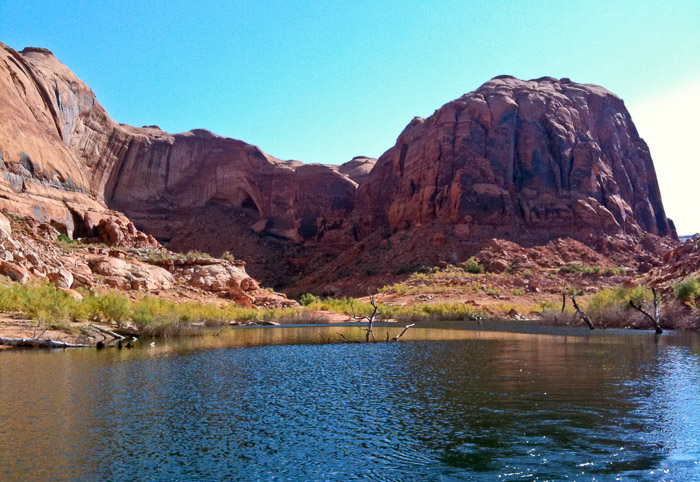
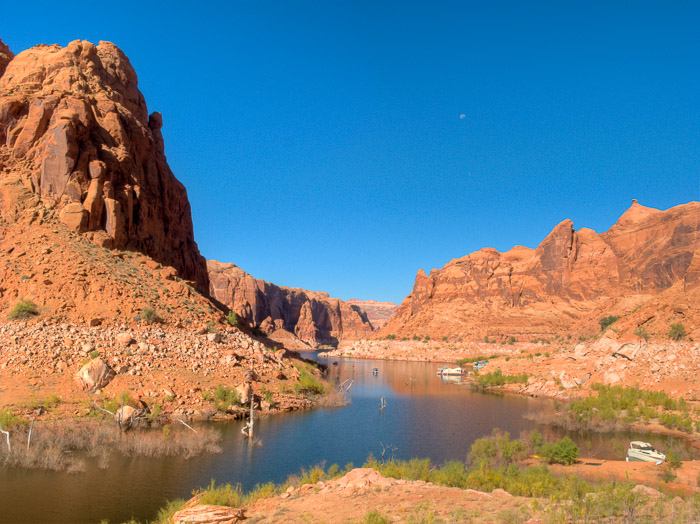
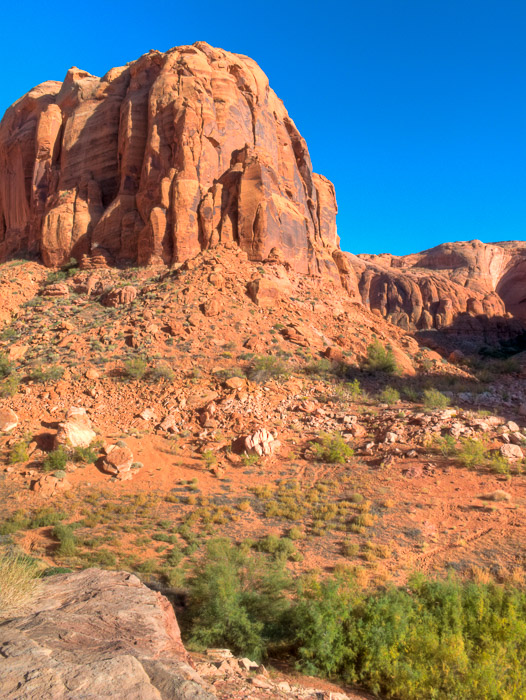
We launched Rick’s boat at Bullfrog and proceeded south to establish camp in Slickrock Canyon. We found a nice beach with access to a trail going further up the gorge. (When the water was higher, most campsites are completely cutoff so there is no opportunity to walk around and explore.)


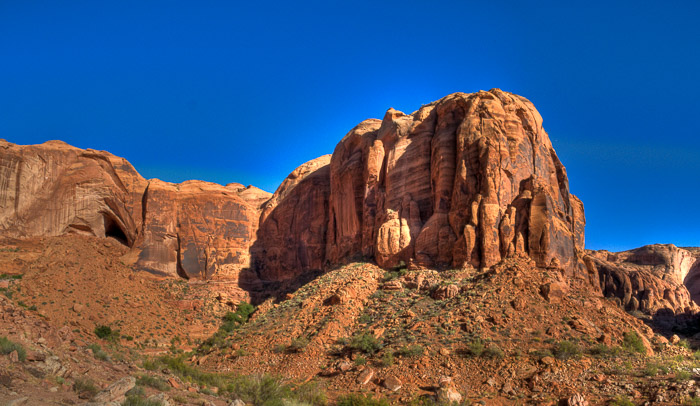
I was new to HDR photography at that time and attempted several multi-exposure panoramas. The image below was knit together from seven 5-exposure image sets. Note the fire ring just left of center. That is where we camped.

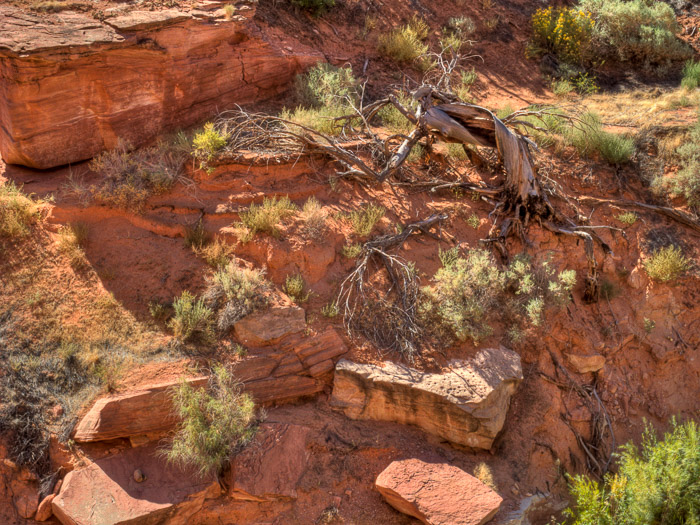
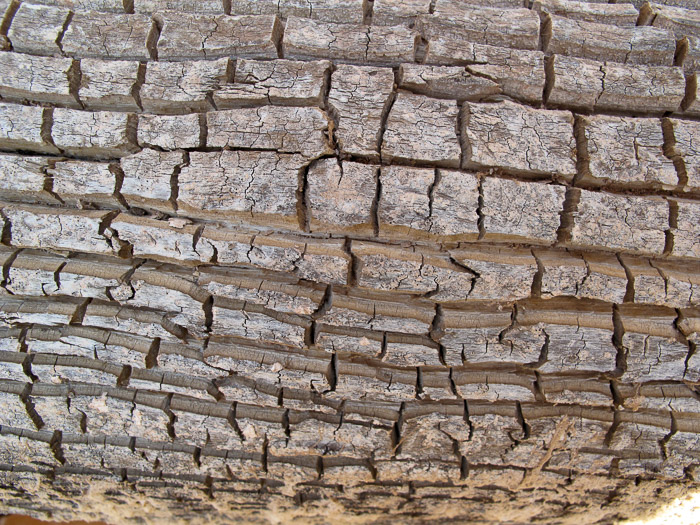
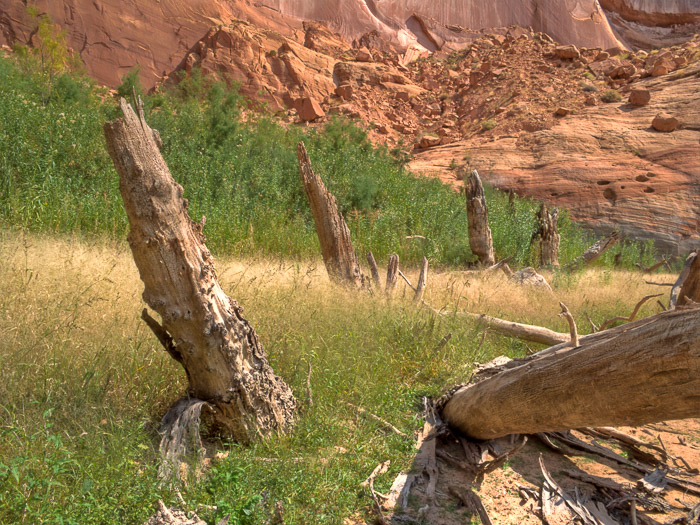
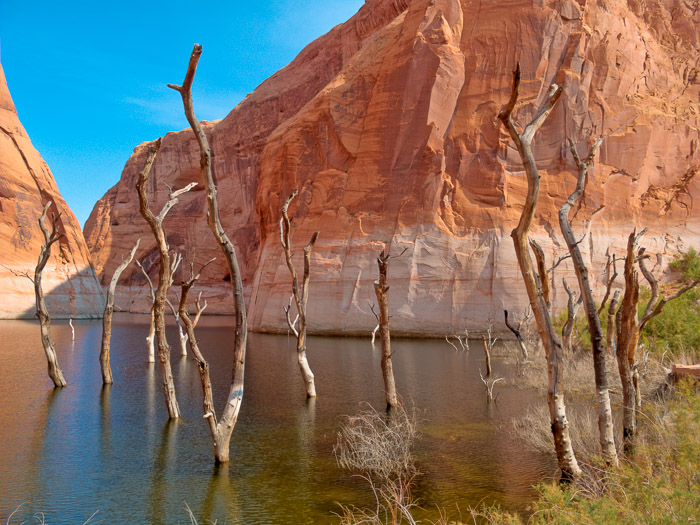
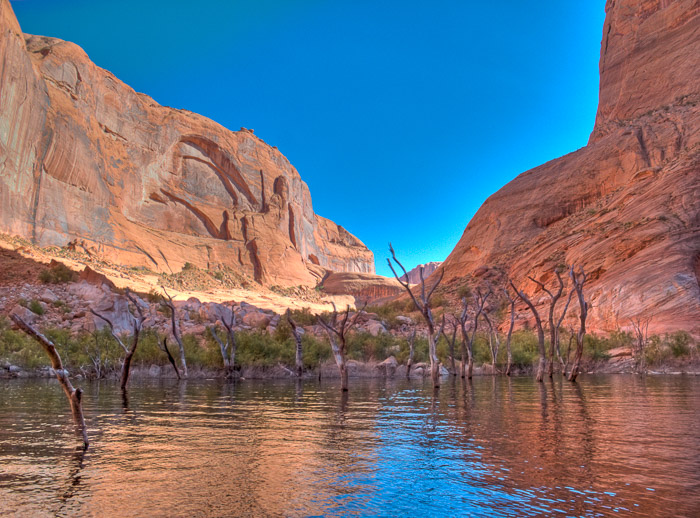
The campsite was nearly perfect with access to both the land and the water. I went swimming twice a day and liked to perch on a huge standing dead tree. The lake level is about forty feet below its former average, so these trees had been completely submerged (and preserved).


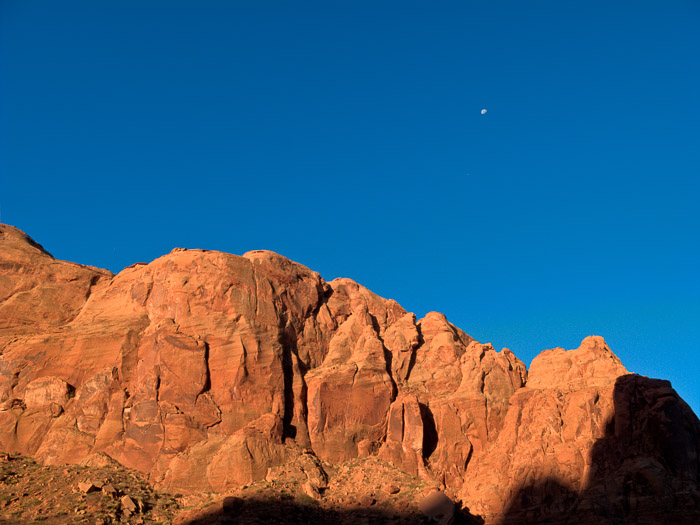
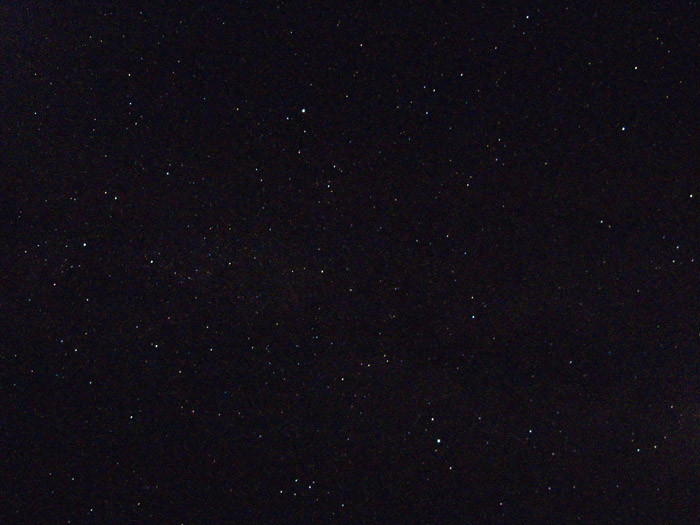
Rick cooked delicious meals on a tiny charcoal grill. I used my laptop each evening to review the day’s photographic results while sipping margaritas. The Moon was up late and we had a terrific view of the Summer Triangle and the Planet Jupiter. I slept out under the stars. We even had a fireworks display on our last night! (Thanks to what turned out to be a boat full of firemen camped further down the valley.)


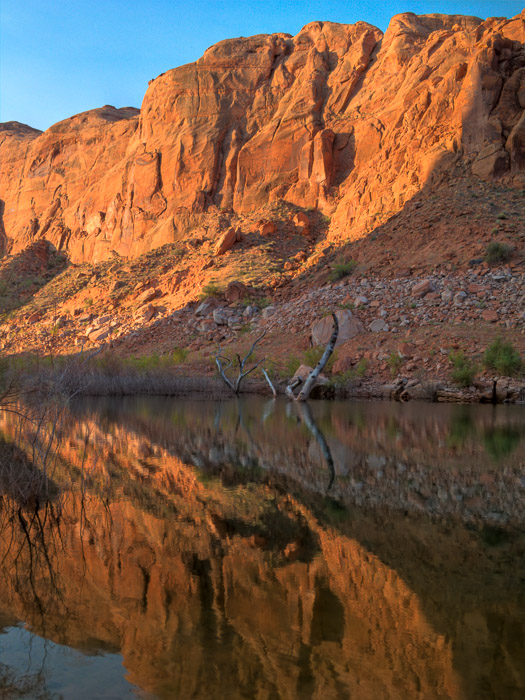


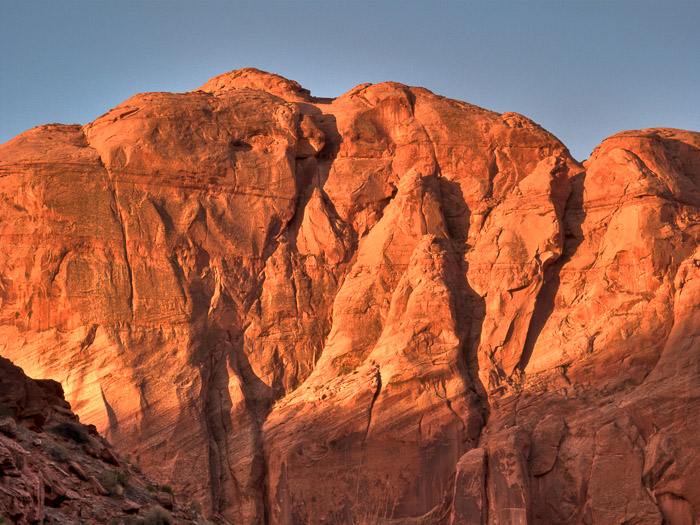

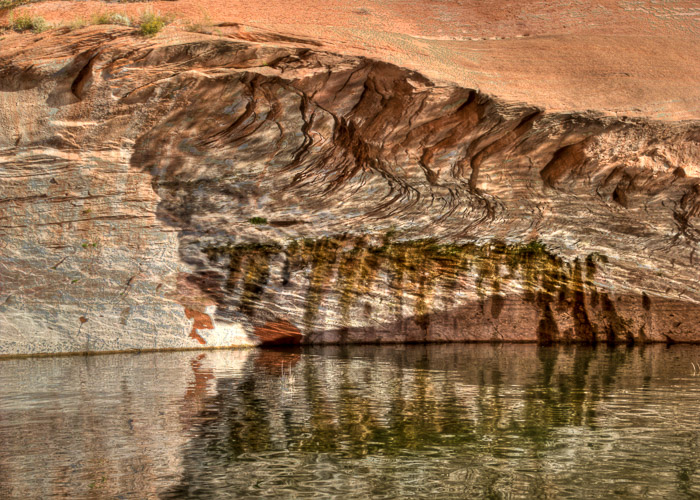
We took several hikes up the canyon at various times of day. We also had a small kayak with which to explore the inlet above our campsite. The first photo below shows the white patina deposited when the nearby rocks were under water.

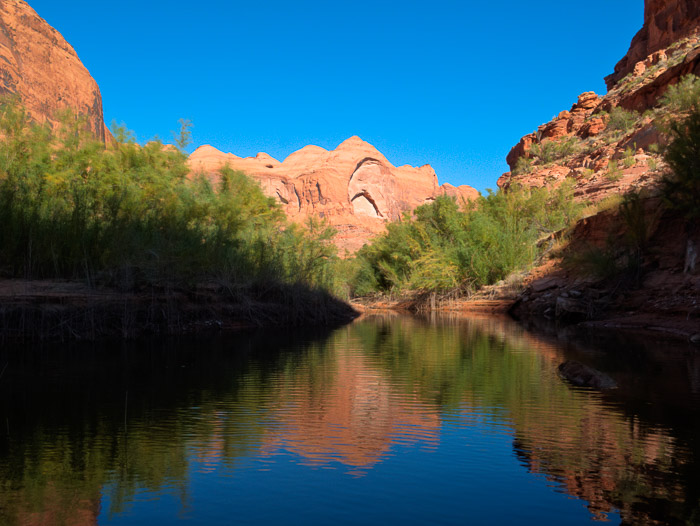
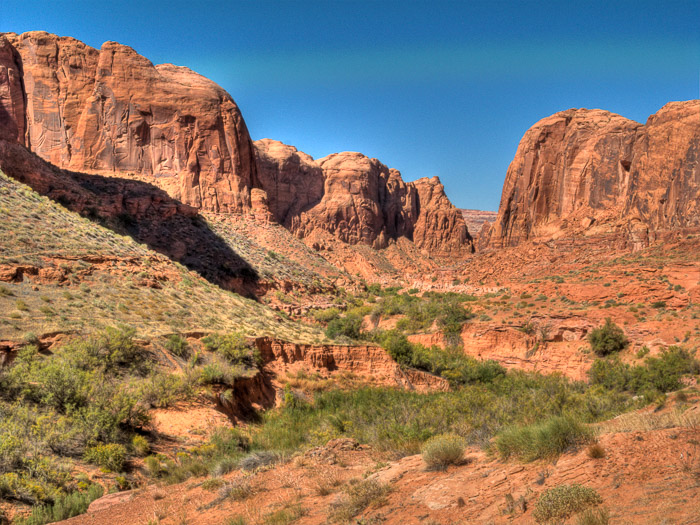
Unfortunately the shoreline was dominated by Tamarisk, which is a recent and unwelcome invader (most of the green in the photo below). While the shade it provides is welcome, it is changing the riparian ecosystem and efforts are underway to control it.

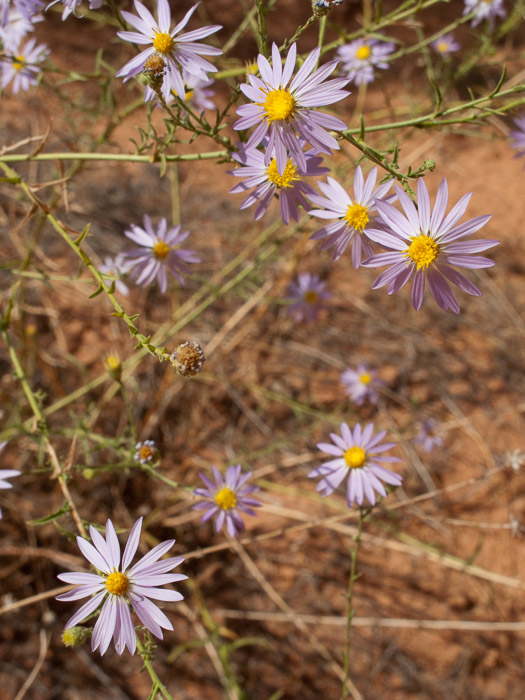
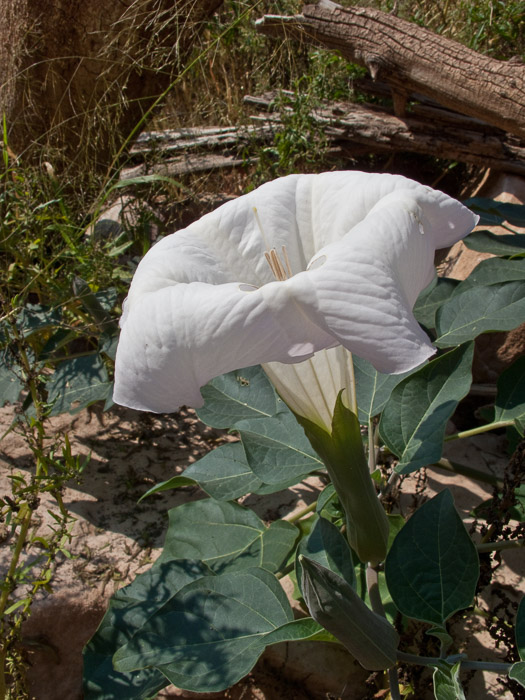
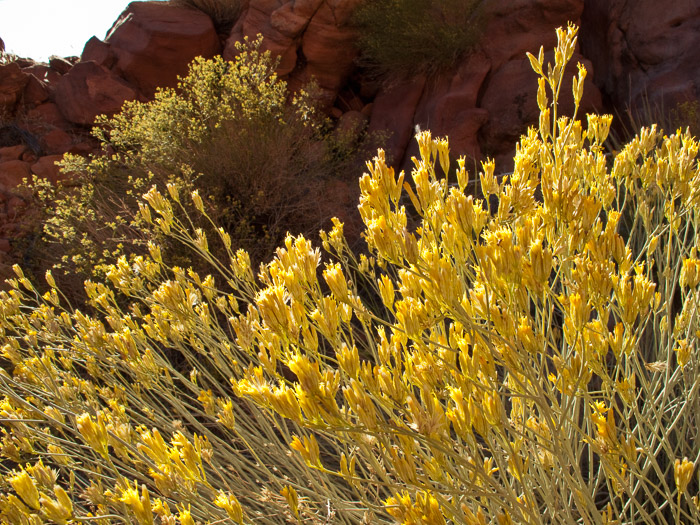
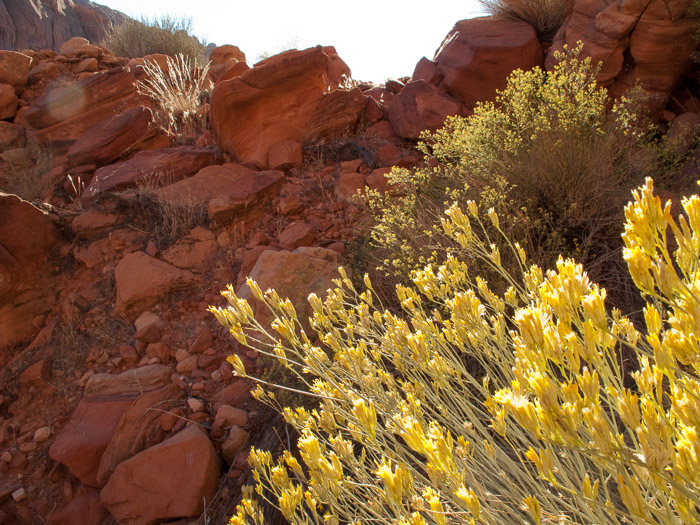
It had rained about a week before, and flowers were blooming everywhere! From left to right: purple asters unfolding with first light, small purple flowers that bite back (!), small yellow flowers that did not open until the afternoon, and a huge “morning glory” that bloomed in the dry creek bed.


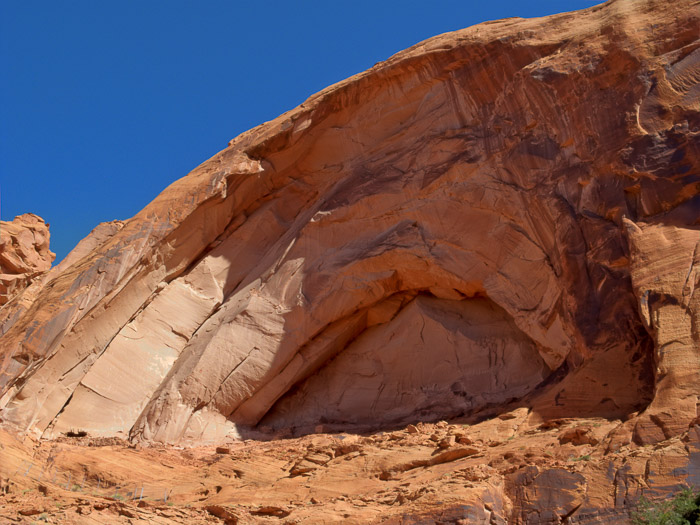
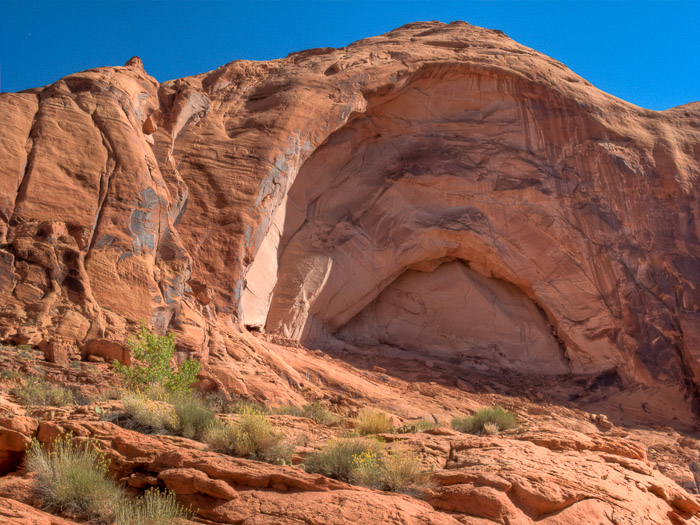
There was a small ruins about a mile above our camp called Mistake Alcove. It is about eight hundred years old and located high inside a beautiful incipient arch. The site faces the south and would be very hot in the summer! (“Mistake” might refer to the lack of shade.) When the lake was higher it was very accessible and became terribly degraded. The Park Service recently had it rehabilitated and put up a fence.




Iceberg Canyon
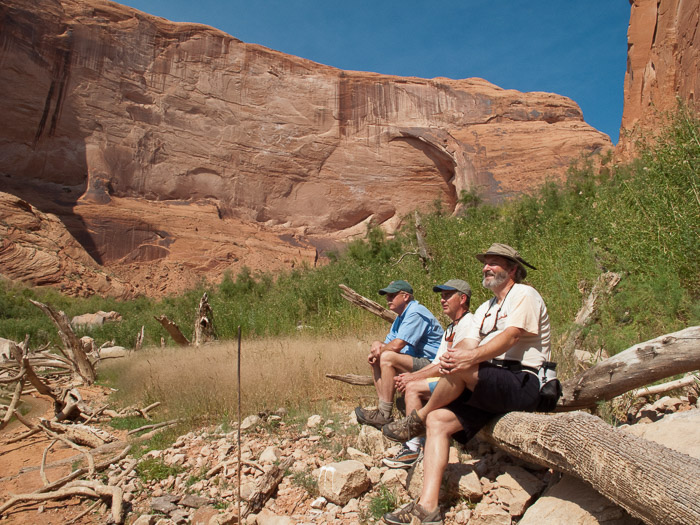
On the third day we picked up Rick’s cousin Glen and took a cruise down to Iceberg Canyon (next canyon to the south).

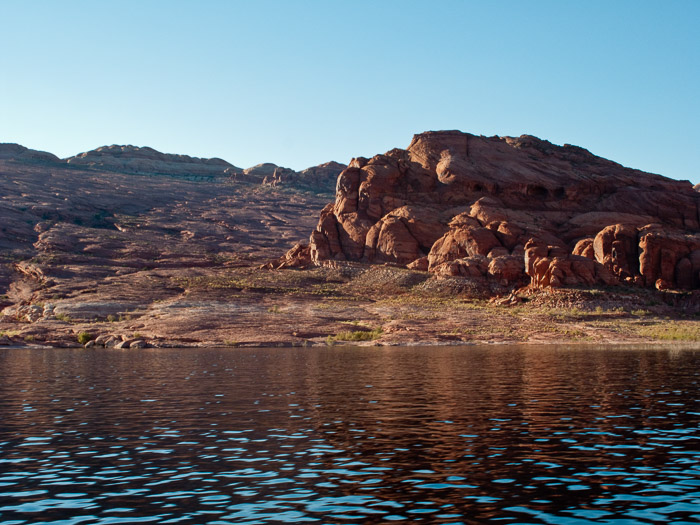
It’s very different from Slickrock, with vertical walls coming right down to the water. The lower water line revealed trees that had been submerged and preserved since the dam was built.

We explored several inlets and had lunch and a swim.

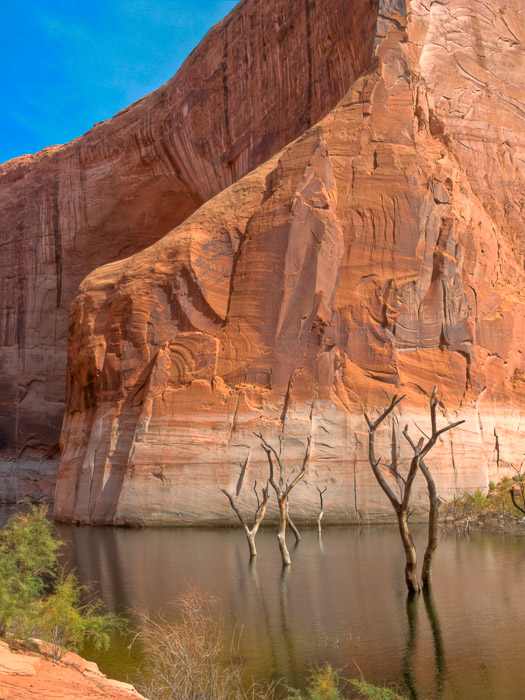

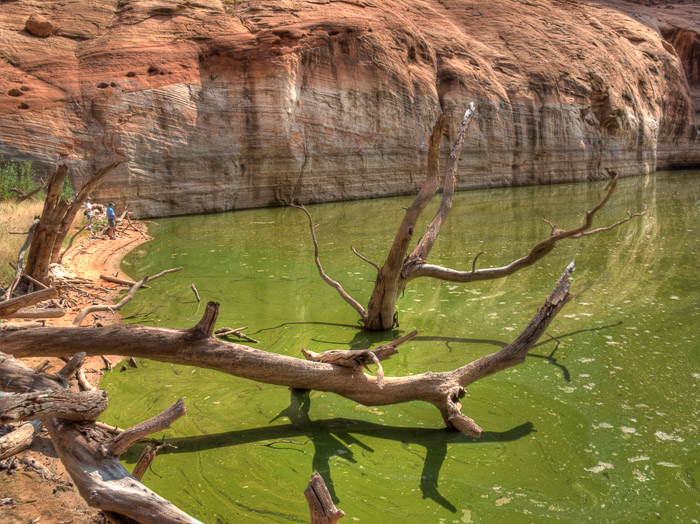
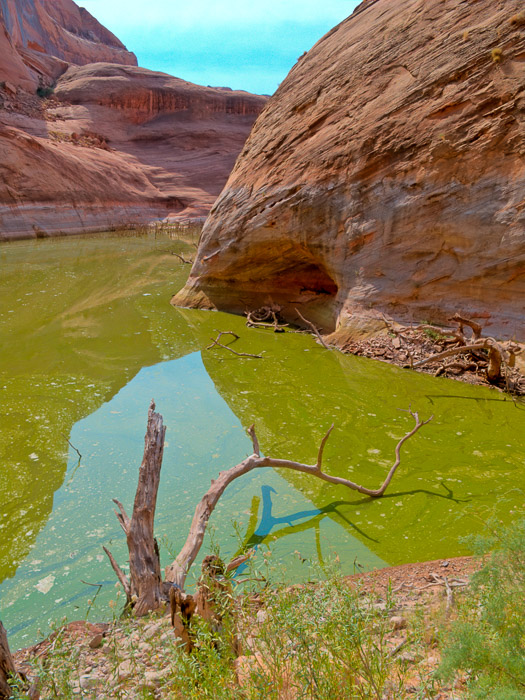
We took a short hike up to a little green lake. At one time it was connected to the inlet but it became cutoff when the water level dropped a few years ago (note the white line about twenty feet up the rock face). It was livid green with algae, but fish were jumping so it wasn’t totally dead.




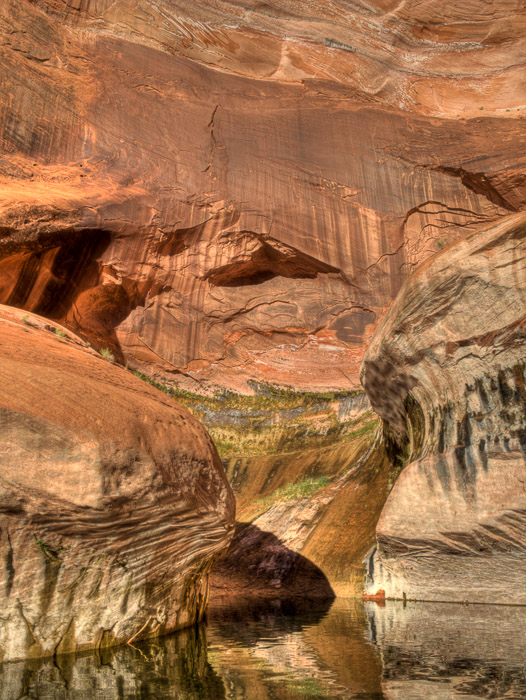
We visited a strange cul-de-sac with water dripping and sunlight shimmering off the water. The cliff top was almost straight up. I took my first vertical panorama showing almost 90°, about 200 feet of elevation. I also took several HDR photos and short videos. No mean feat from a gently rocking boat!



(click any image to view or advance)


